
How Internal Linking Should Be Planned During Website Design

seo friendly user centric design

Most sites leak search value through poorly planned internal links, and you probably don’t realize how much that costs. You should map a clear pillar-and-cluster hierarchy early, decide where nav, contextual, and footer links live, and standardize anchor text so link equity flows to your priority pages. Do this well and you’ll boost usability and rankings—do it poorly and your best content stays buried—so here’s how to get it right.

Internal Linking: Map Site Hierarchy (Pillars & Clusters)

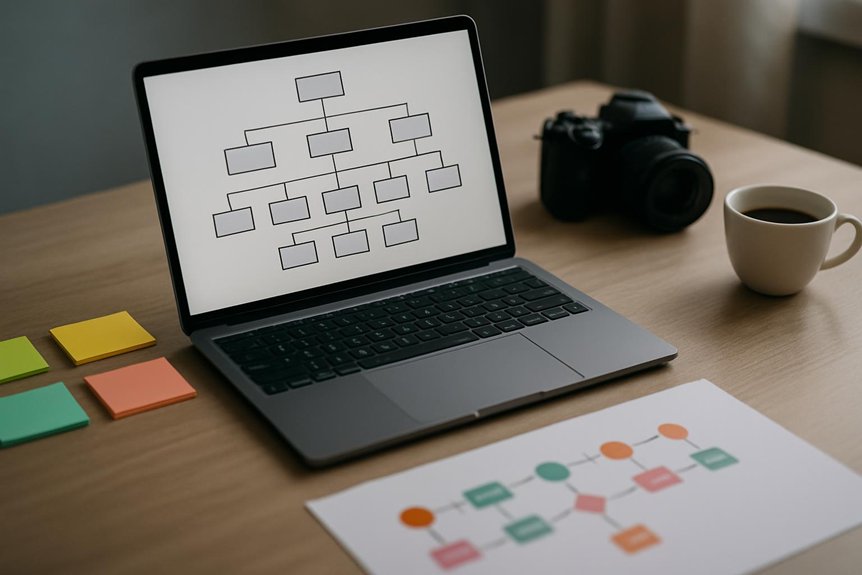
When you map your site hierarchy, start by defining pillar pages that act as central hubs for tightly related content clusters; each pillar should link to multiple supporting articles so users and search engines can quickly see topic authority.

You’ll design an internal linking structure that groups content clusters into clear topical cluster silos, improving SEO performance and user navigation.

Keep important pages reachable within three clicks to boost crawlability and prevent orphaned content.

Organize content around key themes so pillar pages distribute link equity to lower-authority pieces, raising their visibility.

Regularly review and update this map as new pages arrive, ensuring your site hierarchy stays coherent and the internal linking structure continues guiding visitors and search engines efficiently.

Although navigation, contextual, and footer links each serve different goals, you should plan them together so they guide users and search engines smoothly through your site.

When you design internal links, place navigational links in the main menu and sidebars to highlight key sections and reinforce site structure. Use contextual links within body copy to connect related topics, boost engagement, and signal relevance to search engines.

Add footer links for legal pages and contact info to aid crawlability and late-stage navigation. Keep anchor text descriptive and keyword-rich without over-optimizing, since it tells users and bots where a link leads.

A coordinated internal linking strategy improves user experience, encourages deeper browsing, and can reduce bounce rates by directing visitors to valuable next steps.

Write Anchor Text That Signals Keyword Intent

Anchor text tells both users and search engines what to expect, so use descriptive, keyword-rich phrases that match the intent of the linked page.

You should craft anchor text that signals keyword intent clearly, improving user experience and making your internal linking part of an effective SEO strategy.

Vary phrasing to boost contextual clarity and avoid repetition across the website structure. Use action-oriented phrases when appropriate to prompt clicks and guide navigation.

  • Use descriptive, keyword-focused anchors that match page intent.
  • Vary anchors to improve contextual clarity and avoid redundancy.
  • Include action-oriented phrases to increase engagement and conversions.
  • Align anchor choices with site hierarchy to strengthen internal linking.

Consistent, purposeful anchor text helps users and search engines understand content relationships.

Now that you’re crafting anchor text that reflects intent, make sure those links point where they’ll do the most good: to your priority pages. You should prioritize pages like cornerstone content and high-converting product pages so they receive concentrated link equity from high-authority pages.

Design your internal linking structure to funnel authority down the site hierarchy, helping search engines understand relationships and improving overall SEO performance. Use descriptive anchor text that signals relevance and creates clear content pathways, which also boosts user engagement by guiding visitors naturally.

Link deliberately from popular, authoritative pages to lower-authority but strategic targets to elevate them. When you plan linking during design, you’ll create a coherent map that balances user needs with SEO goals and maximizes value across the site.

Ensure Crawlability: Avoid Orphans and Redirects

Because search engines and users can only benefit from pages they can actually find, make crawlability a design priority by eliminating orphan pages and internal redirects.

You should guarantee every important page is linked from elsewhere so orphaned pages don’t get ignored. Run regular site audits and use Google Search Console to spot missing internal links, redirect chains, and excessive crawl depth.

Fix redirects and prune redirect chains to preserve crawl budget and improve SEO performance.

  • Link each important page from at least one contextual page to prevent orphaned pages.
  • Use site audits and Google Search Console to map internal links and find issues.
  • Keep crawl depth to three clicks or less for key content.
  • Remove internal redirects and consolidate redirect chains to speed crawling and protect your link structure.

Build Linking Rules and Content Templates for Creators

When you set clear linking rules and embed them into content templates, creators can consistently add descriptive, keyword-rich internal links that guide users and boost SEO without guessing where to link.

You should document linking rules within your content templates so content creators know when to add contextual links and how to choose descriptive anchor text aligned with your internal linking strategy.

Design templates to include spots for relevant internal links to category pages, pillar content, and product pages to reinforce site hierarchy and navigation.

Tie rules to SEO best practices — avoid generic anchors, prefer semantic targets, and keep link depth sensible.

Review and update templates periodically so they reflect content changes and maintain a coherent, scalable internal linking system.

If you want your internal linking strategy to stay healthy and drive SEO value, set a regular audit cadence, clear KPIs, and the right mix of automated and manual tools to catch issues and guide improvements.

You should set audits quarterly to accommodate site structure changes and guarantee content optimization. Use Screaming Frog or Siteimprove to find broken links and orphaned pages, and combine automated suggestions (Link Whisper) with editorial review.

Track KPIs like links per page, average crawl depth, and percentage of orphaned pages. Use Google Search Console to monitor internal links performance and indexing signals.

Keep periodic reviews brief but actionable so your internal linking strategy stays aligned with traffic goals and search visibility.

  • Quarterly audits with automated scans
  • KPI dashboard for core metrics
  • GSC checks for indexing and clicks
  • Editorial review of suggested links

Frequently Asked Questions

How Is Internal Linking Done in a Web Page?

You create internal links by placing descriptive anchor text within your content that points to related pages, using a logical hub-and-spoke structure, auditing regularly to fix broken links, and prioritizing important pages to distribute link equity effectively.

There’s no fixed number; you should aim roughly for 3–5 internal links per 1,000 words, prioritize cornerstone and high-traffic pages, avoid overlinking, keep links contextual, and audit regularly to prevent orphaned pages.

Where Should Internal Linking Be Implemented?

Like a roadmap, you should place internal links in the main navigation, contextual article text, sidebars, footers, and CTAs. You’ll guide users, boost relevance, shorten click paths, and improve crawlability for better engagement and conversions.

Avoid using identical anchor text across pages, piling too many links on one page, linking to irrelevant content, leaving orphaned pages, or failing to update old posts; you’ll confuse users, harm crawlability, and weaken your site’s SEO effectiveness.

Conclusion

You’ll design internal links that guide users like a map: start with clear pillar pages, weave contextual and navigational links, and use anchor text that signals intent. Prioritize high-value pages, prevent orphans and messy redirects, and distribute link equity deliberately. Build simple linking rules and templates for creators, then set audits, KPIs, and tools to monitor performance. Do this consistently, and your site won’t just rank better — it’ll lead visitors exactly where you want them to go.

SEO vs Web Design: How the Two Work Together for Better Visibility

seo and web design synergy

Think of your website as a storefront window that either invites people in or turns them away. You’ll want a design that’s clear and fast, and SEO that makes it easy to find. When layout, code, and content work together, visitors stay longer and search engines take notice — but getting that balance right takes a few practical choices you’ll want to see next.

What Web Design and SEO Each Solve

While web design shapes how visitors experience your site—through layout, navigation, and responsive pages—SEO guarantees people can actually find it by optimizing keywords, content, and URL structure.

You’ll use web design to craft a smooth user experience and logical site structure so visitors stay, click, and convert, while SEO targets visibility through keyword research, optimized SEO content, and clean URLs to attract organic traffic.

When you integrate design work together with SEO from the start, you reduce bounce rates and improve dwell time, which supports search engine rankings.

Don’t treat them as separate tasks: design delivers engagement, SEO drives discovery, and combined they make your site both easy to find and pleasant to use.

How Layout, Navigation, and Code Affect Rankings

Because search engines reward clarity and user satisfaction, your site’s layout, navigation, and code directly shape its rankings: clear headings and sections make content easier to index, intuitive menus lower bounce rates and boost dwell time, and clean HTML plus schema markup helps crawlers understand each page’s purpose.

You should design layout that presents information logically, improving readability and supporting SEO goals. Navigation must be intuitive so users find content quickly, raising dwell time and lowering exits.

Keep code lean and semantic, using correct tags and schema to aid search engines and increase visibility. Prioritize mobile responsiveness and optimize assets to improve page speed, since faster, mobile-friendly sites deliver better user experience and higher rankings.

SEO Requirements Designers Must Follow

When you design a site, you must follow a handful of SEO rules that directly affect visibility and usability: You’ll meet core SEO requirements by blending web design and optimization.

Guarantee every image has alt text for accessibility and search engines. Use clean URL structures that include relevant terms. Apply strategic keyword placement in headings and meta titles to signal content focus.

Prioritize responsive design since most traffic comes from mobile devices, improving user experience and search engine rankings. Perform page speed optimization to boost engagement and ranking.

  • Include descriptive alt text and concise meta titles
  • Build clean URL structures and place keywords in headings
  • Guarantee responsive design for mobile devices and fast page speed optimization

Site Architecture & Navigation for Users and Crawlers

Good site architecture connects the on-page SEO rules you already follow to how people and search engines move through your site.

You should design site architecture with a logical hierarchy and clear navigation so visitors find content fast and crawlers map pages efficiently.

Use headings (H1, H2) and internal linking to show content relationships, improving search engine crawling and boosting visibility.

Site maps — both XML for bots and HTML for users — outline structure and highlight important pages.

Prioritize user experience: clear navigation reduces bounce rates and raises dwell time, signaling relevance.

Make navigation mobile-responsive so menus and links work across screens, helping both users and crawlers access pages without friction, which supports stronger SEO outcomes.

Mobile‑First Web Design and SEO Benefits

Why should you prioritize mobile-first web design? You rely on mobile-first indexing, so your mobile-responsive design directly affects SEO rankings and overall digital presence.

Prioritizing mobile users improves user experience with seamless navigation and reduced bounce rates, which search engines notice. Apply mobile optimization strategies to streamline layouts, use adaptive images, and simplify interactions to lift conversion rates without extra clutter.

  • Faster, focused mobile layouts boost page speed and engagement.
  • Seamless navigation and readable content lower bounce rates and increase dwell time.
  • Mobile-first design aligns with mobile-first indexing to protect SEO rankings and conversions.

When you design for mobile first, you make choices that benefit users and search engines alike, improving visibility and performance.

Improve Speed & Core Web Vitals (Designer Checklist)

Because page speed shapes first impressions and search rankings, you should treat Core Web Essentials as a design priority: optimize LCP by deferring noncritical resources, reduce FID with minimal main-thread work, and prevent CLS by reserving space for images and embeds.

To improve speed, compress and serve responsive images, remove heavy scripts, and limit plugins so page load speed and site performance improve.

Enable browser caching for static assets to cut load times and boost user experience.

Run Google PageSpeed Insights regularly to track Core Web Crucial Metrics and target specific fixes.

Prioritize optimization tasks that yield measurable gains in load times and engagement metrics.

Faster pages lead to better SEO outcomes and higher dwell time, so make speed part of your design checklist.

Content Structure, Headings, and Keyword Placement

How should you structure content and headings to make pages both scannable for readers and readable for search engines? Use clear content structure with one H1, logical H2/H3 sections, and concise paragraphs to boost readability and indexing.

Place relevant keywords early—within the first 100 words—and weave strategic keyword usage into headings and body so search engines map your topic to user search queries.

  • Use an organized content outline with H1, H2, H3 for hierarchy and scannability.
  • Add relevant keywords naturally in headings and opening sentences for better indexing.
  • Update sections regularly with fresh, strategic keyword phrases matching user search queries.

This approach improves readability for users, helps search engines understand relationships across pages, and maintains SEO value through ongoing content refinement.

Web Design and SEO for Images, Video, and Alt Text

After you’ve organized headings and keywords for readability and indexing, you should apply the same care to images and video so visual content supports both users and search engines.

In web design and seo, optimize images with descriptive file names and concise alt text to help search engines index visuals and boost accessibility for visually impaired users.

For video, use clear titles, metadata, and transcripts so search engines can parse and rank your multimedia elements.

Compress high-quality images and videos to preserve page load speed without sacrificing content clarity.

Thoughtful use of images and video increases user engagement and time on page, sending positive signals to search engines.

Make alt text accurate and helpful, tying multimedia elements directly to on-page content goals.

Common Integration Mistakes That Hurt Rankings & Conversion

Mistakes that split design and SEO often show up as lower rankings and slipping conversions, and you’ll usually spot them quickly if you know where to look.

You risk keyword stuffing that harms readability and SEO success, and you’ll lose users if mobile responsiveness and page load time aren’t prioritized.

Failing to monitor user engagement and bounce rates hides problems that reduce conversions. Lack of collaboration between web designers and SEO specialists creates a disjointed site with poor website performance and weak clear calls to action.

  • Overloaded media and slow page load time hurting rankings and user engagement
  • Ignoring mobile responsiveness, increasing bounce rates and lost conversions
  • Keyword stuffing and design choices that obscure clear calls to action

Audit, Testing, and a Workflow to Align Designers + SEOs

You’ve seen how split responsibilities can tank rankings and conversions, so the next step is to put audit, testing, and a clear workflow in place to keep designers and SEOs moving together.

Run regular audit cycles that check performance, page load, bounce rates, and user experience so design changes map to SEO goals and visibility.

Use A/B testing to validate how layout, CTAs, and content affect engagement, then feed results back into the workflow.

Set shared KPIs and use analytics to prioritize optimization tasks.

Establish communication routines—standups, handoffs, and review meetings—to maintain collaboration and avoid rework.

With this loop of audit, testing, and coordinated design/SEO action, you’ll continuously improve site performance and search visibility.

Frequently Asked Questions

What Is the Difference Between SEO and Web Design?

SEO improves your site’s search visibility through keywords, technical tweaks, and links, while web design shapes how visitors experience your site with layout, visuals, and navigation; you need both so users find and actually engage with your content.

How Does SEO Improve Website Visibility?

SEO improves your website’s visibility by optimizing content and keywords, structuring pages for easy crawling, using meta tags and alt text, and regularly updating high-quality content so search engines rank and show your site to relevant users.

What Is the 80/20 Rule in SEO?

The 80/20 rule in SEO says you’ll get about 80% of traffic from 20% of your content, so you’ll focus efforts on that top-performing content, optimizing keywords, UX, and links to boost visibility and conversions.

How Do You See SEO and PPC Working Together to Improve Results?

You can combine SEO and PPC by using SEO keyword insights to shape high-performing ads, feeding PPC data back into organic content, and employing remarketing to recapture organic visitors, boosting visibility, clicks, conversions, and overall ROI.

Conclusion

When design and SEO work together, you get speedier pages, clearer navigation, and higher search rankings — and one study found sites that load in under two seconds see bounce rates drop by up to 9%. That stat shows small technical choices make big user and ranking differences. Keep layouts intuitive, code clean, and content structured; align designers and SEOs early, test regularly, and you’ll turn visibility into sustained traffic and better conversions.