

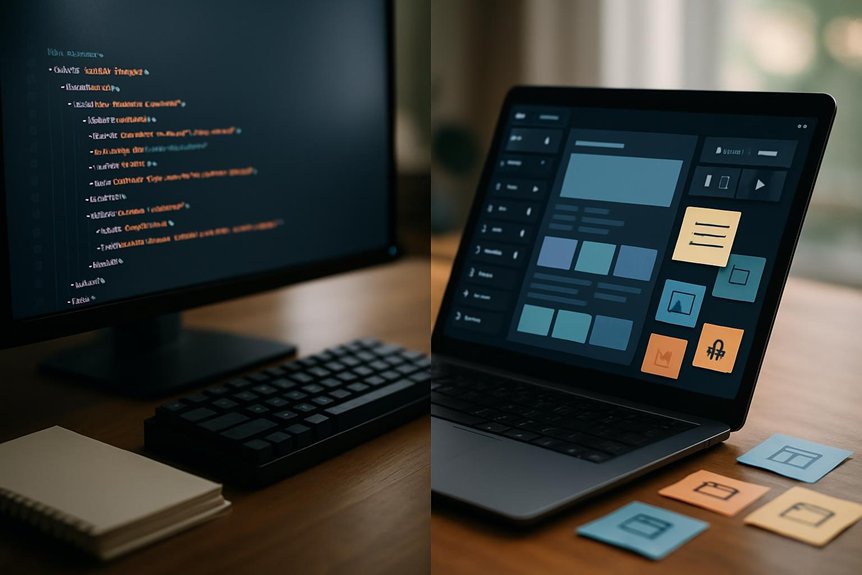
When you’re choosing between a custom web design and a page builder, the SEO trade-offs are real: one gives you full control over markup, speed and structured data, while the other saves time and money but can limit URLs, schema and performance. You’ll want to weigh immediate costs against long-term organic growth—and the right choice depends on your goals and resources—so keep going to see the exact pros, cons and a practical decision checklist.
How SEO Outcomes Differ: Custom Web Design vs Page Builders
When you need search visibility, custom web design gives you the control to implement precise SEO tactics—tailored keywords, metadata, structured data, and optimized code—that page builders usually can’t match.
You’ll get faster loading pages from optimized code, which cuts bounce rates and helps rankings, while custom websites let you craft proper mobile responsiveness and site architecture.
Page builders often lock you into templates, limiting URL structure, hierarchy, and advanced search engine optimization tweaks.
With a custom site you own content and analytics access, so you can iterate based on performance data; with many page builders you’ll face restricted data and limited changeability.
If you want predictable, measurable SEO outcomes, custom design gives you the tools to achieve them.
Technical SEO Builders Often Mishandle (Crawlability, Schema, Headings)
You’ve seen how custom design gives you tight control over SEO strategy; now look at where many page builders fall short on the technical details that make that strategy work.
You’ll find crawlability suffers when builders force generic site structures or bury pages behind JS-driven navigation, making indexing unreliable. Schema markup support is often minimal or hard to customize, so you miss rich snippet opportunities that boost CTR.
Heading tags get misused—multiple H1s or skipped levels—confusing content hierarchy and search engines. Builders also limit meta and alt tag customization, restricting on-page optimization.
Finally, slow loading times from bloated builder code raise bounce rates and undermine all other efforts, so you’ll want to verify technical flexibility before committing.
How Speed, Mobile UX and Markup Impact SEO Rankings
Although technical SEO sets the strategy, site speed, mobile UX and clean markup are what actually determine whether search engines and users stick around—slow pages or a clumsy mobile layout boost bounce rates and cut conversions, while semantic HTML and structured data help search engines understand and reward your content.
You’ll see measurable drops: a one-second delay can shave conversions and raise bounces, so prioritize speed with optimized assets and server responses.
Since Google uses mobile-first indexing, your mobile user experience must mirror or exceed desktop functionality; responsive design reduces friction and engagement loss.
Finally, use semantic markup and structured data so crawlers parse intent and context, which improves visibility and ranking potential when combined with fast, mobile-friendly pages.
SEO Advantages You’ll Actually Get From a Custom Website
Speed, mobile UX and clean markup set the baseline, but a custom website is where you turn those technical advantages into measurable SEO gains. You get tailored keyword and metadata implementation that aligns with goals, improving search engine rankings.
Your site structure and navigation are optimized for users and crawlers, reducing friction. Fast, lean code cuts load times and bounce rates. Mobile-responsive design meets Google’s expectations. Full ownership of content and data preserves SEO value when you move or update.
- Tailored keywords and metadata for business intent
- Optimized architecture that helps crawling and UX
- Minimized code for faster loads and lower bounce
- Mobile-first layouts that boost mobile visibility
- Complete content/data ownership for portability
Working with skilled web developers makes these benefits real.
Cost vs SEO ROI: Page Builders vs Custom Web Design
When weighing cost against SEO ROI, think beyond monthly fees: a page builder might save you about $50/month up front, but its generic templates and limited optimization tools can cap your organic growth and lead to missed revenue.
Whereas a custom site requires a larger initial investment yet lets you implement tailored SEO, faster performance, and UX improvements that compound into higher traffic and conversions over time.
You’ll face a clear cost vs seo roi tradeoff: website builders lower short-term spend but often blunt long-term gains because they restrict technical SEO, schema, and speed tuning.
Custom web design costs more initially but enables targeted strategies that boost search rankings and conversions—research shows optimized sites can raise conversions up to 200%—so ROI usually favors custom work long-term.
Decision Checklist: Choose Custom or a Builder (Budget, Features, Timeline)
If you need a site fast and cheap, a page builder gets you live in a day for about $50/month.
But if you want tailored features, better SEO, and a polished UX that scales, plan for a custom build that takes a few weeks and a higher upfront investment.
You should weigh budget, features, and timeline against long-term goals. Builders suit simple sites, tight budgets, and urgent launches; custom sites fit complex needs, SEO strategies, and growth plans.
- Assess your budget: monthly convenience vs upfront investment for scalability.
- List required features: plugins vs bespoke integrations.
- Set your timeline: launch urgency vs development lead time.
- Consider SEO needs: basic controls vs advanced optimization.
- Prioritize user experience and future maintenance.
Frequently Asked Questions
What Are the Disadvantages of Website Builder?
They limit SEO depth, use generic templates that harm branding, cause slower loads and higher bounce rates, impose page/navigation limits, and offer weak technical support, so you’ll struggle with performance, scalability, customization, and complex issue resolution.
What Is the 3 Second Rule in Website Design?
You’re told the 3-second rule: you must show your site’s purpose and clear navigation within three seconds, or visitors bail; it’s practically a lifetime online, so you’ll optimize visuals, messaging, speed, and intuitive layout to retain users.
What Is the Difference Between SEO and Web Design?
SEO optimizes your site’s content, structure, and authority to rank in search results, while web design shapes your site’s look, usability, and responsiveness; they overlap, but SEO targets visibility and design targets user experience.
What Is the Difference Between a Web Designer and a Website Builder?
A web designer builds a custom, optimized site for your specific needs and scalability, while a website builder gives you drag-and-drop templates and limited customization so you can quickly create simpler sites without deep technical expertise.
Conclusion
You’ve seen how custom web design gives you control over speed, markup, crawlability, and long-term SEO, while page builders can cut costs now but limit URLs, schema, and meta flexibility. Which would you rather have: quick savings or sustained organic growth? If you want higher conversions and durable rankings, choose custom; if budget and speed-to-launch matter most, a builder can work—just plan for SEO trade-offs and future migration.